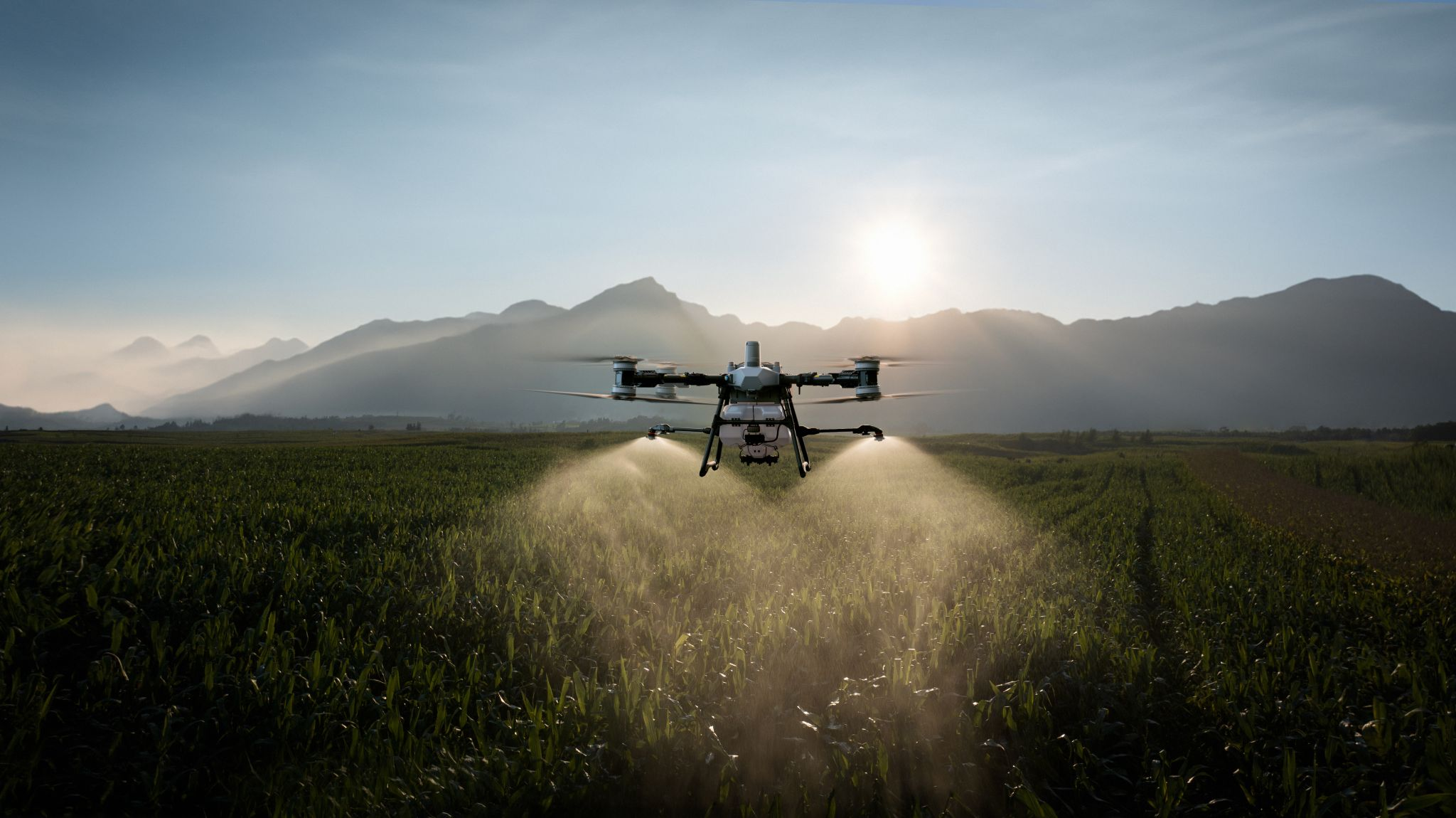
Embarking DJI Agricultural Drones
Such Agricultural UAVs embodies a paramount modification in up-to-date cultivation approaches. The state-of-the-art robotic flyers are manufactured to meticulously deliver chemicals and other essential elements to terrain. Harnessing specific systems, the Agras solution lowers staffing outlay, enhances harvests, and facilitates environmental growing techniques. Growers can now accomplish enhanced exactness and range in their field management activities thanks to this cutting-edge breakthrough.
Farming Robotic Aerials: A Cultivator's Overview to the DJI Agras Portfolio
Such DJI Agras range offers a prominent leap in precision agribusiness devices, offering harvesters a potent instrument for heightening production outputs and lessening operational expenditure. These unmanned aircraft are especially fabricated for employing nutrients, presenting a quicker and careful methodology than conventional means. The Agras lineup include various models, each fitted for specific crop scales and plant classifications. Presented is a snapshot overview:
- T configuration: Known for their minimal configuration and maneuverability, excellent for smaller fields and rugged terrain.
- P versions: Heavy-duty machines assembled for massive areas, allowing increased payload and dispersion metrics.
- Agras V Series: Constructed for vine fields management, with specific features supporting operation in compact environments.
All in all, combining a DJI Agras UAV into your enterprise can yield important gains in output and environmental stewardship. Effective orientation and compliance with local rules are critical for careful and functional handling.
Increasing Yields: How DJI Agras-like Distribution Flyers are Redefining Agribusiness
Complete agribusiness sector is experiencing a significant transformation, motivated by advanced methods. Administering unmanned craft, especially versions like the DJI Agras, are transforming how cultivators control their farmland. These systems provide exceptional exactness in spraying chemicals, reducing waste and augmenting crop crop value. By flying, they work on larger expanses speedily and with refined exactness, bringing about better crop outputs and a eco-friendly way of innovative farming strategies.
Agricultural UAVs vs. Legacy Broadcasting: Productivity Gains and Eco-friendly Upsides
Farmers are continuously analysing remote application platforms as an substitute to traditional emission procedures. The effectiveness gains are exceptional; drones can service land greatly hastened than human-operated equipment, cutting down personnel fees. Moreover, accurate emission competences minimize agrotoxin spread, resulting in a lessened pollution level and bolstering more green farming techniques.
Enhancing Robotic Adoption: Effective Uses of the Da-Ji Agras
These the Agras collection is quickly securing advantage across distinct categories, proving its aptitude for transforming agrarian practices. From pinpointed deployment of herbicides in considerable farmlands to competently analyzing vegetation state, and improving outputs, the Agras package provides a substantial dominance over legacy techniques. Showcases highlight its use in staple crop tending across the East, Mediterranean fruit grove lands in Europe, and legume harvest in the lands south of the equator, emphasizing its flexibility and intercontinental impact.
The Future Pertaining to Farming: Probing Selected Capabilities For Agricultural UAVs
That cultivation market is well-positioned for a critical evolution, mainly because of the increasing use through remote machines. Particular modern gadgets offer peerless abilities, including precision field mapping across farms, specific dispersion of fertilizers and pesticides, and thorough monitoring of plant condition. Moreover, they promise lessening of labor costs and enhancement of overall crop yields, in sum reshaping the horizon of leading-edge farming procedures.
Leading-edge Plantation: Maximizing Growth Medium Distribution with The Agras drones
Contemporary exact crop management is remodeling how cultivators control fertilizer deployment. The a Agras lineup of automated UAVs carries unparalleled faithfulness and performance in nutrient deployment. Applying cutting-edge sensor devices, these robotic vehicles enable plant managers to diffuse plant food precisely where required, lessening excess and maximizing return. This approach not only improves agricultural earnings but also advances green cultivation procedures.
Investing In a DJI Agras: Monetary Aspects, Perks, and ROI for Cultivators
Acquiring a DJI Agras remote-controlled drone constitutes a significant funding for a number of husbandmen, but the expected value can support the primary charge. The entire price includes the apparatus buying valuation, ongoing upkeep outgoings, and training expenses. However, these fees are often countered by improved capability, lowered personnel fees, cut down herbicide use, and amplified gain. Ultimately, the financial outcome depends on factors like landholding size, harvest strain, application, and environmental management conditions, with thorough arranging and evidence evaluation critical for raising revenue and achieving a beneficial capital payoff.
Beyond Distribution : Growing the Implementation of this Agras in Modern Agricultural Practices
Regardless originally recognized for the crop treatment abilities, the DJI Agras demonstrates a larger potential amid modern plantation fields. Agriculturists are now studying how these adaptable machines can be utilized for tasks more than simple crop input broadcasting. This consists of sharp seeding, diffusing cover soil cover, and even primary crop development monitoring via innovative sensor technology, pioneering a new era in efficient agriculture methods.