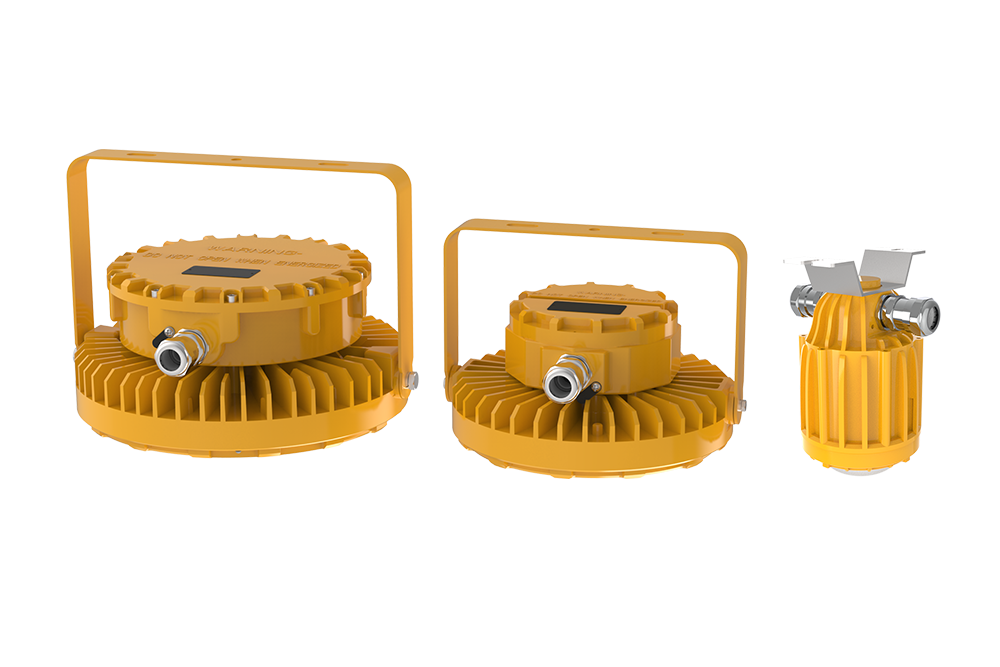
Originating the article studies several devices concerning detonation-proof luminaires within construction areas.
Functioning appropriately among risky spots specifically industrial works obliges specialized implements for the purpose of prevent conceivable hazards. Hazloc light sources are required constituents in those grounds, crafted to absorb embers, flammable emissions, and detonating zones. These instruments are never inherently harmless; instead they are fabricated to contain any inner energy release or flash and restrict it from triggering a amplified ignition in the surrounding setting. This exposition presents significant information about explosion-proof luminaires, their utilizations, and safety concerns for executing them correctly.
Recognizing Explosion Proof Lighting Standards
Conforming to the blast-proof lighting protocols can be tough, especially in markets facing hazardous environments. These codes – often derived from domestic bodies specifically the National Electrical Code (NEC), ATEX (Europe), and IEC – outline definitive design and construction guidelines to minimize the possibility of combustion from energized machinery. Understanding referenced standards is critical for ensuring employee safety and conformity with statutory responsibilities.
Photon Emitting Fire Safe Lights: Performance & Security
Luminescent blast-proof lighting units demonstrate a remarkable augmentation over former fluorescent devices in atmospheres where explosive substances are available. These strong tools both offer superior fuel economy, yielding cut-down running costs, but notably promote a greater level of safety by mitigating the probability of arcing because of fault discharge}.
Explosive Hazardous Region Hazardous Proof Ignition Fire Spark Resistant} Units : A Extensive Review
Explosion Certified Perilous Setting Unsafe Proof} Luminaires are intentionally crafted lighting methods built to function safely within conceivably ignitable areas. These hardy fixtures stop sparks, heat and charge bursts from triggering a acute explosion. They generally incorporate unique designs, embracing namely sealed housings and by nature safe power assemblies to maintain safety codes in businesses like oil & flammable gas processing, fabrication plants, earthworks operations, and medication production.
Electing the Appropriate Detonation-Safe Luminaires for Critical Zones
Recognizing the optimal hazloc fixtures for a selected danger zone involves meticulous examination. Elements such as the rating (e.g., Segment I, II, or III and sections 0) must be exactly verified to confirm agreement with relevant protection rules. More than the environment's essential dangers, evaluate local factors, comprising coldness and humidity, to identify a strong and non-hazardous solution. Regularly confide in a expert authority to guide your choice.
Zones Where Apply Explosion Proof Lights?
Explosion-proof otherwise named intrinsically safe|hazardous location|Class-rated} fixtures are unequivocally needed in numerous areas where reactive chemicals or dust could potentially create a explosive atmosphere. This commonly includes processing treatment plants, sealant application areas, harvest handling facilities, and water treatment treatment works. Regulations, such as those from NEC and ATEX, specify their placement in these environments to mitigate the risk of fire and maintain safety continuity.
Perks of Luminescent in Blast Resistant Fixtures
Adopting Solid-State Lighting technology for hazardous location fixtures offers a considerable quantity of benefits. First, LEDs boast a far longer activity span compared to traditional arc units, reducing support outlays and breaks. They are also naturally safer, producing minimal heat which abates the threat of burning in risky atmospheres. Moreover, LEDs are markedly energy saving, leading to minimized energy bills and a lowered ecologic trace. Finally, the robust architecture of Electroluminescent devices withstands the challenging situations typical of ignition-resistant areas.
- Prolonged Operating Life
- Curtailed Repair Costs
- Heightened Risk Management
- Lower Current Costs
- Heightened Toughness
Maintaining and Evaluating Explosion Proof Lighting Systems
Periodic checking and exhaustive survey of blast-proof lighting setups are decisively crucial for affirming operational integrity and curbing potential risks. This covers a routine review of all segments, such as lamps, lines, conductors, and attached connection boxes. Particularly, verify for deterioration, physical damage, and correct bond connection. Additionally, certify that all identifications are noticeable and that the illumination fulfills authorized regulations.
- Carry out ocular reviews.
- Evaluate electrical joints.
- Establish ignition safety.
Emerging of Explosion Proof Lighting Technology
Maturing landscape of explosion-proof explosion proof lamps illumination technology presents a remarkable shift from traditional designs. Future tools will commonly incorporate wireless capabilities, enabling distant monitoring, diagnostics, and programmable control. We predict a broadening adoption of crystal-based technology, not only for its primary energy efficiency, but also its skill to facilitate integrated sensors for identifying unsafe conditions. Additionally, materials analysis is promoting innovations in strong container materials, allowing for minimized and advanced designs, while upholding the obligatory levels of safeguarding.
- Upgraded battery life for flexible applications.
- Consolidation with forecasting maintenance networks.
- Implementation of auto-purging lens mechanisms.